← All services

CCTV & Video Surveillance

Analog CCTV and IP camera systems planned around the areas, image detail, retention, and access your site needs.

Tell us what you need →
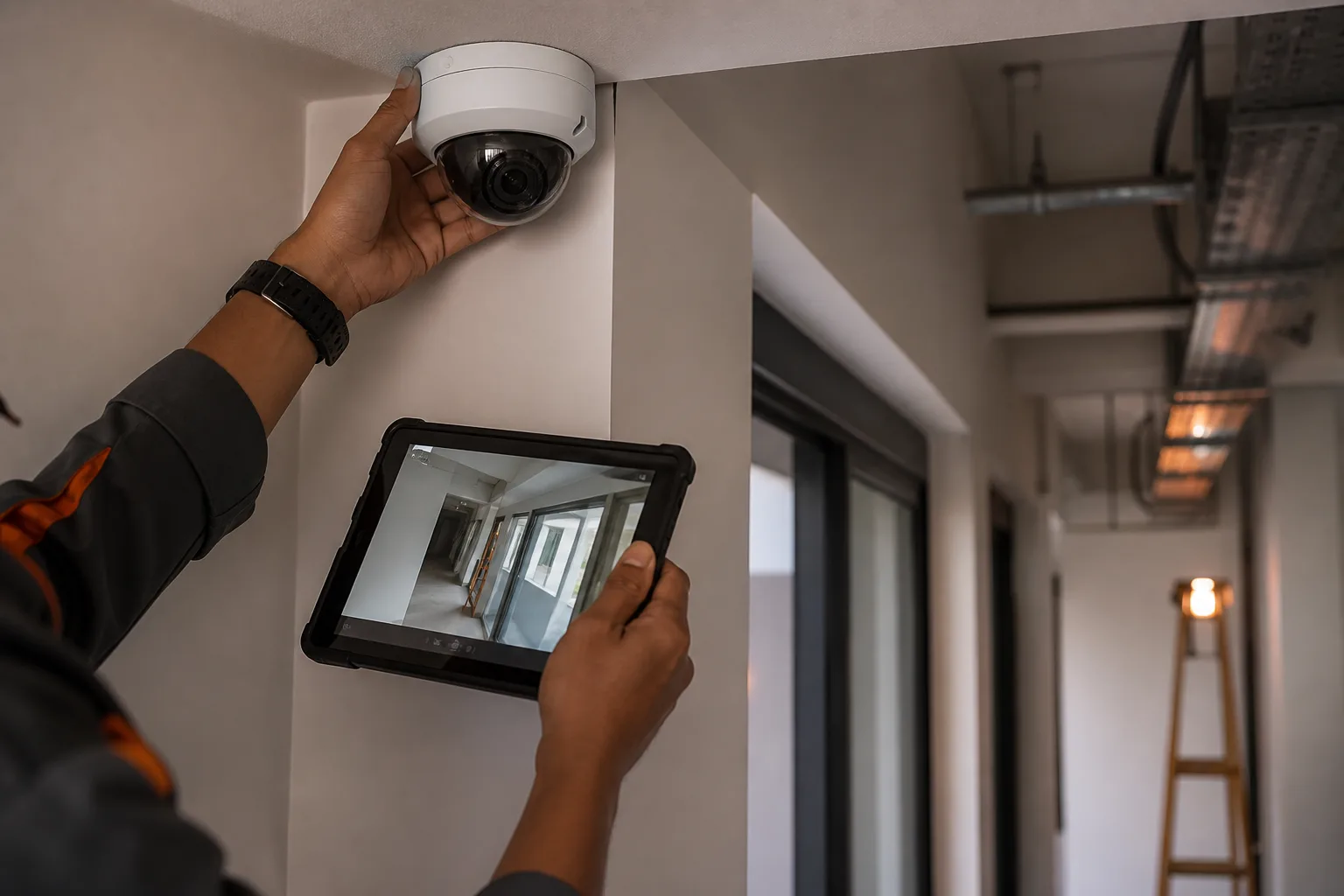
A technician aligning an IP camera and checking its field of view

A useful surveillance system starts with the question it needs to answer: which areas matter, what detail must be visible, how long recordings should be kept, and who needs access. We plan analog CCTV and network-based IP camera systems for offices, factories, schools, hospitals, shops, warehouses, homes, and other sites.

The work may cover a site survey, camera placement, DVR or NVR capacity, cabling, network and power readiness, secure remote viewing, installation, and testing. The result is a system planned around the site rather than a camera count chosen in advance.

Service definition

What is a video surveillance system?

A video surveillance system combines cameras, recording, storage, networking, power, and controlled access to observe defined areas and preserve useful footage for authorized review.

Video surveillance designed around the site and its real risks

A useful CCTV system starts with what must be observed, the detail required, how long footage should be retained, and who is authorized to access it.

01

Analog CCTV systems

Cost-conscious analog camera deployments with appropriate camera selection, cabling, DVR capacity, recording quality, and storage planning.

02

IP cameras and NVR

Network-based camera systems with scalable recording, suitable resolution, network readiness, controlled access, and secure remote viewing.

03

Site survey and camera placement

Assess entrances, circulation areas, operational zones, lighting, blind spots, viewing angles, cabling paths, and power availability before installation.

04

Installation and maintenance planning

Coordinate installation, camera alignment, recording tests, authorized-user handover, system health checks, and practical maintenance.

Questions before you begin.

Straightforward answers to help you assess scope and choose a useful first step.

Should we choose analog CCTV or IP cameras?

Analog CCTV can be suitable for straightforward, cost-conscious installations or upgrades using compatible cabling. IP cameras are useful when higher resolution, network-based management, scalability, or advanced integration is required. The right choice depends on the site and operating need.

How many cameras does a location need?

The number follows the areas and events that must be observed, required identification detail, blind spots, lighting, building layout, and operational priorities. A site survey is the appropriate starting point.

Can CCTV footage be viewed remotely?

Yes, where the selected system and connectivity support it. Remote access should be configured for authorized users with strong credentials, controlled permissions, current firmware, and secure network settings.

Privacy policy